Wednesday, October 3, 2012

Serenity Now


Serenity Now, 2012
(Click on images to see larger)

Back in July I wrote about my dislike of being a “tourist,” and used as the focal point for that essay a day spent in Monterey, California. Two months later, I haven’t changed my impression about Monterey. Aside from a terrific aquarium, the old cannery row is a tourist trap.
But enough about that. Today I speak up for a few moments of serenity that also occurred in Monterey.
In the daytime Monterey is overrun with tourists. But like a lot of places that are popular with tourists during the daytime, the early morning presents a very different impression.
We stayed just outside of the main tourist area at a place that was just across the street from the Pacific Ocean. At sunrise this little stretch of beach was quiet and, with the exception of just a few people walking their dogs, I had the place to myself. I wish you could have heard it. 
Monterey Bay meets the shore here with none of the drama of points further out on the Monterey Peninsula. There’s an intelligently landscaped park between the street and the beach. Fog obscured the long view and softened the edges of things.
I walked along the beach until I came to what looked like the only working wharf left on the downtown waterfront. A few fishermen were preparing their nets for the day. Occasionally you heard the chug-chug-chug of a fishing boat headed out for albacore.  
Across the harbor I heard seals making their distinction guttural bark. It took a while for me to realize that the sea lions were fighting among themselves for space on the transom (the back) of a small commercial fishing boat. As I watched them jump up onto the boat and make space by pushing other sea lions off of the boat, a harbor policeman approached and explained that so many sea lions had recently been trying to sun on the deck of another commercial fishing boat that their weight had caused the boat to capsize in the harbor.
Sometimes your serenity comes with a little humor from the natural world. It sure did for me that morning in Monterey. 
 
The San Giovanni, 2012

Monday, October 1, 2012

Shooting into the Rain


Showing the Colors, 2012
(Click on images to see larger)


One habit that’s easy to fall into for the photographer is shooting only on sunny days, even though sunny days have some of the worst conditions for photographers. The bright sun and garish overhead light cause dreadful shadows, especially when you’re photographing people. (Yes, you can compensate with fill flash, but for those of us who prefer natural light it’s just not the same.)
This past Saturday morning a passing storm front lowered the temperature into the high sixties and low seventies. But the day also started with rain and the forecast called for only more rain. I’d intended to go down to the oceanfront and shoot the annual Neptune Festival Parade. But I’ll be the first to admit that when I looked out the window in the morning it would have been awfully easy to crawl back into bed or into a comfortable chair with a book.
But then my photographer friend Glen reminded me that rainy days are rich with photographic opportunity and, well, I just couldn’t be accused of wussing out because of a little rain. I wouldn’t melt, of course, and most modern DSLR cameras are pretty water tight if you keep them out of a driving rain. So I gathered up a rain slicker and some cover for the camera and headed for the resort strip.
If photographing parades interests you at all, you know that the best action happens in the staging area before the parade starts. You can get up close and personal to parade participants. They’re relaxed and, in Saturday’s case, hadn’t realized that they were going to be marching up Atlantic Avenue and playing their music and carrying their banners against a steady north wind. There’s time to engage them in conversation, and it’s a lot easier to get them to stand for a picture while they’re waiting that it is when you have to chase them down the street.
 
Caught! 2012
It never really cleared on Saturday morning. When it wasn’t drizzling or outright raining there was still a thick mist in the air. But that created a wonderfully even light for photographing people.
To be honest, I’ve shot so many parades over the years that I’ve pretty much lost interest in documenting the parades themselves. I tend to look now for the personalities of the parade participants. By the time the parade starts, I might take a few shots of floats or musicians. But as I follow the parade up the street I’m shifting my attention to the people who came to watch the parade.
 
They did the Monster Mash, 2012
The Neptune Festival is special because although it was originally intended to at least partially extend our tourism “shoulder season,” it’s also arguably the most popular event for those of us who are “locals.” A lot of locals stay away from the resort area during the crowded summer tourism season, and they don’t come to see the Shriners when they parade earlier in the month.
But for thirty-nine years now, the end of September has signaled the beginning of a two-week celebration of food, wine, art, concerts, sandcastles and all sorts of other fun. It’s the signal that it’s okay for locals to come back to the resort area. And come back they did this past Saturday, even in the rain.
Over the next few days I’ll be showing some of the people I photographed at the Neptune Parade. For now, this post includes some of the other shots of the day.
 
Sometime the Viewers are More Fun Than the Parade, 2012

Friday, September 28, 2012

Me & Lee


Trio of Swells, 2010
(Click on images to see larger)

Lee Friedlander is one of the country’s most respected photographers, known for his use of black-and-white photography to portray America’s social landscape. It may sound silly to say, but Friedlander’s style would be very much at home at Flickr, where there are many who photograph on similar themes in similar style. Of Freidlander’s approach, Michael Kimmelman of the New York Times wrote:

“With Winogrand's appetite and aplomb but with fewer neuroses than either Winogrand or Arbus; without Mr. Frank's anger or Evans's caustic wit - just by being rather cool and nonchalant, he has, over the years, refined a mischievous but fundamentally rigorous and unforgiving style.”

I’m sure that in my own study of the history of photography I have seen and studied many of Friedlander’s photographs. If you asked me to identify a single Friedlander image, though, I’m not sure I could come up with one as easily as I can recall the work of some of the other greats of photography.

In fact, I wouldn’t even be writing about Friedlander now if I hadn’t come across a spread in the September 20, 2012 issue of The New Yorker magazine about an exhibit of Friedlander’s work that opens at New York’s Pace/McGill Gallery in late October.

Pace/McGill’s a prestigious gallery. Friedlander was a groundbreaker in taking on the everyday fabric of American life. I have no beef with them, him or this exhibit.

Okay, I guess I do. When I looked at the New Yorker spread, I thought someone had stolen some of my black-and-white images. Here in the magazine in a two-page were five images that could have been from me. They include two recurring themes of mine, window reflections and mannequins. I’ve even been working on a collection of images very much like Friedlander’s taken over the last several years.

 
Friedlander - Part of a New Yorker Spread, 2012

And now he’s gone and scooped me! But truthfully, I bear Lee Friedlander no ill will. His work made it possible for others of us to be taken seriously on occasion. It’s just that if I go forward with this project, I suppose it will always be considered homage to Friedlander.

J. Press, 2007

I guess I could do worse.

If you’d like to see more of Lee Friedlander’s work, you can click here and here.


Wednesday, September 26, 2012

Violated


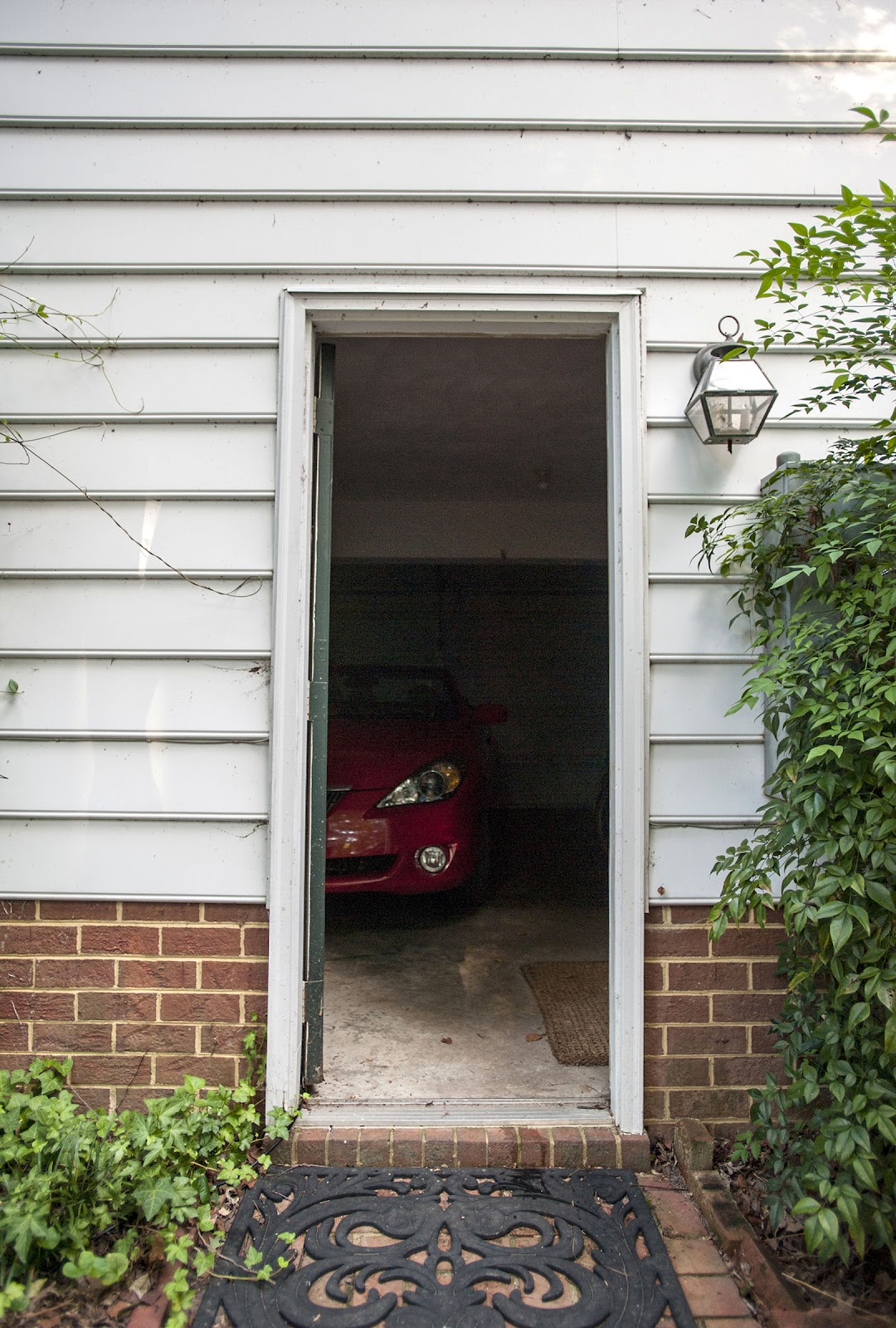
No Forced Entry, 2012

What they don’t show you on programs like CSI and Law & Order is that after the crack forensics team leaves the scene of the crime it’s the victims of the crime who have to do all the cleaning up.

We were recently the victims of a home burglary. I won’t go into the details other than to say that no one was hurt and the house sustained no damage. But stuff was taken, the police were called, and the next thing I knew there was a crack forensics technician here in the wee hours of the morning photographing the house inside and out and dusting every door, doorknob and dresser top for finger prints.

If your home has ever been burglarized, you know how this feels. Even if you haven’t had this happen to you, you can imagine. The word you’re looking for is “violated.”
I’ve not been immune to crime in my life. When I was in college I ran a pizza place that was robbed one Friday night when the place was full of high school kids after a football game. No one was hurt. But it still left us all shaking for several days.

Another job I had during college involved supervising newspaper carriers and handling large sums of cash every other week when they did their route collections. It wasn’t unusual for people in this job to get robbed, especially if you worked, as I did, in tough neighborhoods. I was stalked several times, but never robbed. But I did have to pitch in after co-workers had been robbed and it was pretty creepy walking the same streets where they’d just been robbed or abducted.

Years later, my wife and I came home to our apartment house from a weekend away to find that our elderly downstairs neighbor, who’d been reduced to taking in boarders to help pay the rent, had been murdered by a drug-addled friend of her boarder.

None of these experiences, however, involved us cleaning fingerprint dust from doors, doorknobs and dresser tops. The police technician warned me not to try to wash it off with water. She likened it to automobile brake dust, which if you try to wash it off only becomes harder to clean. Cleaning up the fingerprint dust took hours. The inside of the garage door still looks like someone set off a black dust bomb.

Given the various theoretical timelines that have been proposed, it’s possible that our dog was here when the crime took place and could tell us who did it. She’s a fierce barker, but not too physically imposing. We’ve reminded her, though, that if she’s ever given any thought to speaking our language, this would be a good time to start.